

Surgical theatre suppression: why and how?
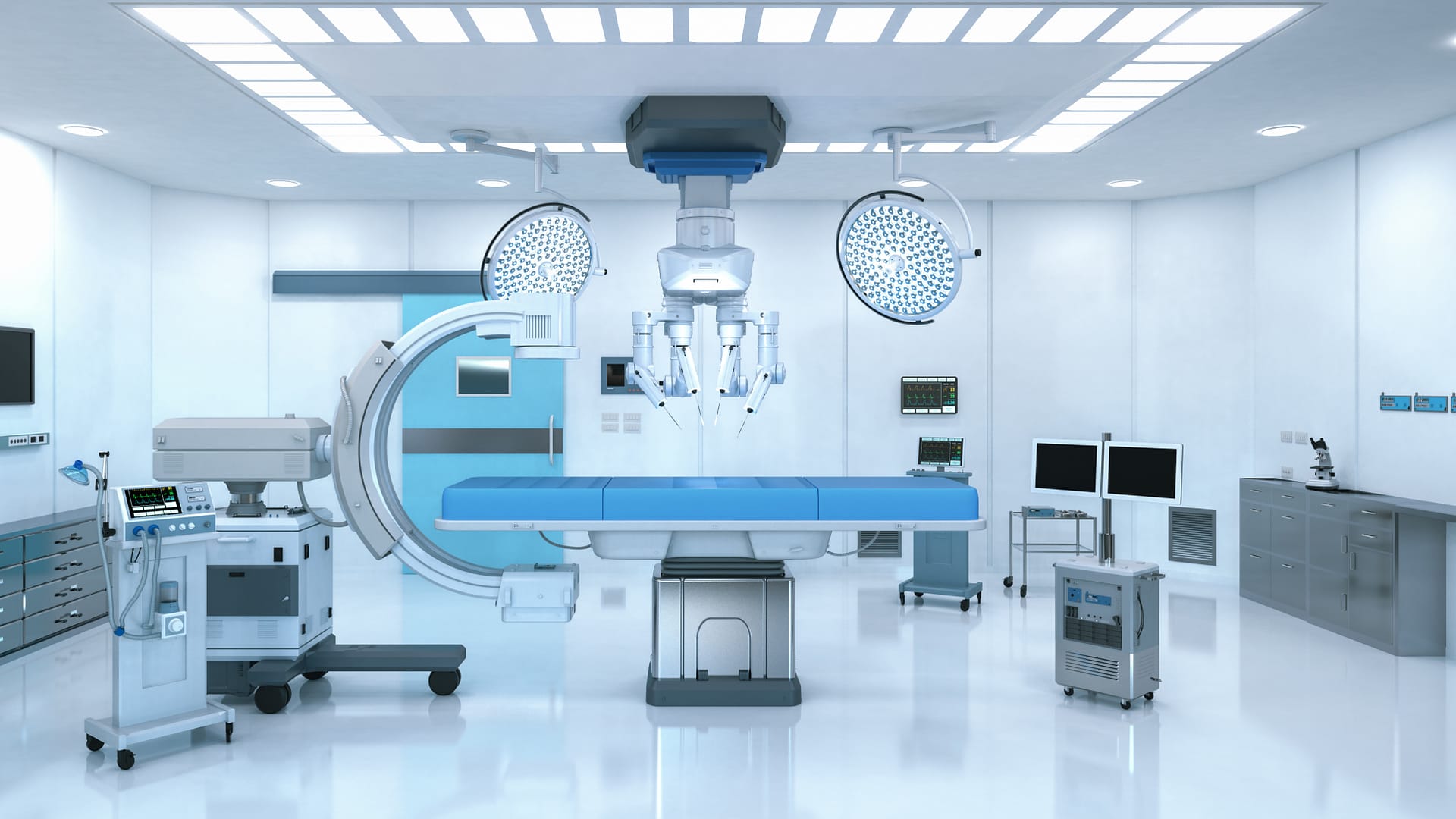
Positive pressure in the operating theatre is based on a simple principle: the aim is to encourage airflow from the cleanest areas towards adjacent areas with a lower level of cleanliness. In practical terms, to achieve this, the operating theatre must be maintained at a pressure slightly higher than that of the adjacent rooms. This pressure difference limits the inflow of air from the adjacent rooms, which may contain higher levels of particles or micro-organisms.
The issue is therefore directly linked to the prevention of surgical site infections or infections in the sensitive area. Controlling the air environment constitutes an important element in the prevention of infectious risk. The mechanism is simple: the air transports particles that are potential vectors for bacteria. It is therefore a matter of limiting their intrusion to make the surgical procedure safer.
Overpressure must also be seen as an element of overall balance. It replaces neither filtration nor air renewal, but reinforces their efficiency. Without this pressure differential, even perfectly filtered air can be disturbed by uncontrolled inputs.
How is overpressure implemented?
Overpressure is generally achieved by ensuring that the supply air flow rate exceeds the exhaust air flow rate from the room. This difference in flow rate generates an airflow out towards the adjacent rooms and helps to maintain the pressure gradient.
Everything therefore relies on the correct sizing of the flow rates. An efficient air treatment installation must provide a sufficient supply air flow rate, whilst maintaining a slightly lower extraction rate. This adjustment is tricky because too much overpressure can disrupt doors or comfort, and too little renders it ineffective.
System stability also depends on factors that are often underestimated. For example, a poorly adjusted door, an unsealed service penetration or frequent openings can compromise this pressure differential. This is why operating theatres frequently incorporate airlocks, which act as buffer zones.
The differential pressure can be continuously monitored using dedicated sensors. The data transmitted to the control system enables the pressure cascade to be maintained and, depending on the design of the installation, allows the air flow rates to be adjusted or an alarm to be triggered in the event of a deviation.
What references and what requirements?
In France, NF S 90-351 is a major benchmark for controlling airborne contamination in healthcare facilities. Other standards may also apply depending on the characteristics of the installation: ISO 14644-1 for the classification of airborne particulate cleanliness, or EN 1886 for the mechanical performance of air handling units.
Beyond the texts, performance relies primarily on overall consistency. A well-adjusted overpressure that is poorly utilised quickly loses its appeal. Conversely, a design that incorporates actual usage staff movement, door opening frequency, maintenance allows conditions to be stabilised over the long term.