


Understanding the NF S90-351 standard
To meet health and safety challenges, particularly in the healthcare sector, France has established a specific framework: the NFS 90-351 standard. Indeed, whether in operating theatres, intensive care units, or preparation and handling areas in laboratories, air is a major safety factor. A surgical operation can be compromised by airborne micro-organisms and particles.
A public health issue
This standard was originally published in 2003 and then revised in 2013. It is primarily aimed at healthcare facilities and aims to set clear performance levels for better control of air-related risks. NF S 90-351 defines health safety requirements relating to the design, construction, operation, maintenance and use of air treatment and quality control installations in healthcare facilities.
These notably include criteria concerning:
- the airborne particulate cleanliness class; ;
- microbiological contamination control ;
- the elimination kinetics of the particles ;
- flow regimes and pressure differences between zones; ;
- the filtration, diffusion and return air conditions; ;
- ambient parameters such as temperature and humidity; ;
- the qualification, monitoring and maintenance of the facilities.
This standard helps ensure a common basis between facilities, engineers, and ventilation solution suppliers.
From a regulatory requirement to a driver of technological innovation
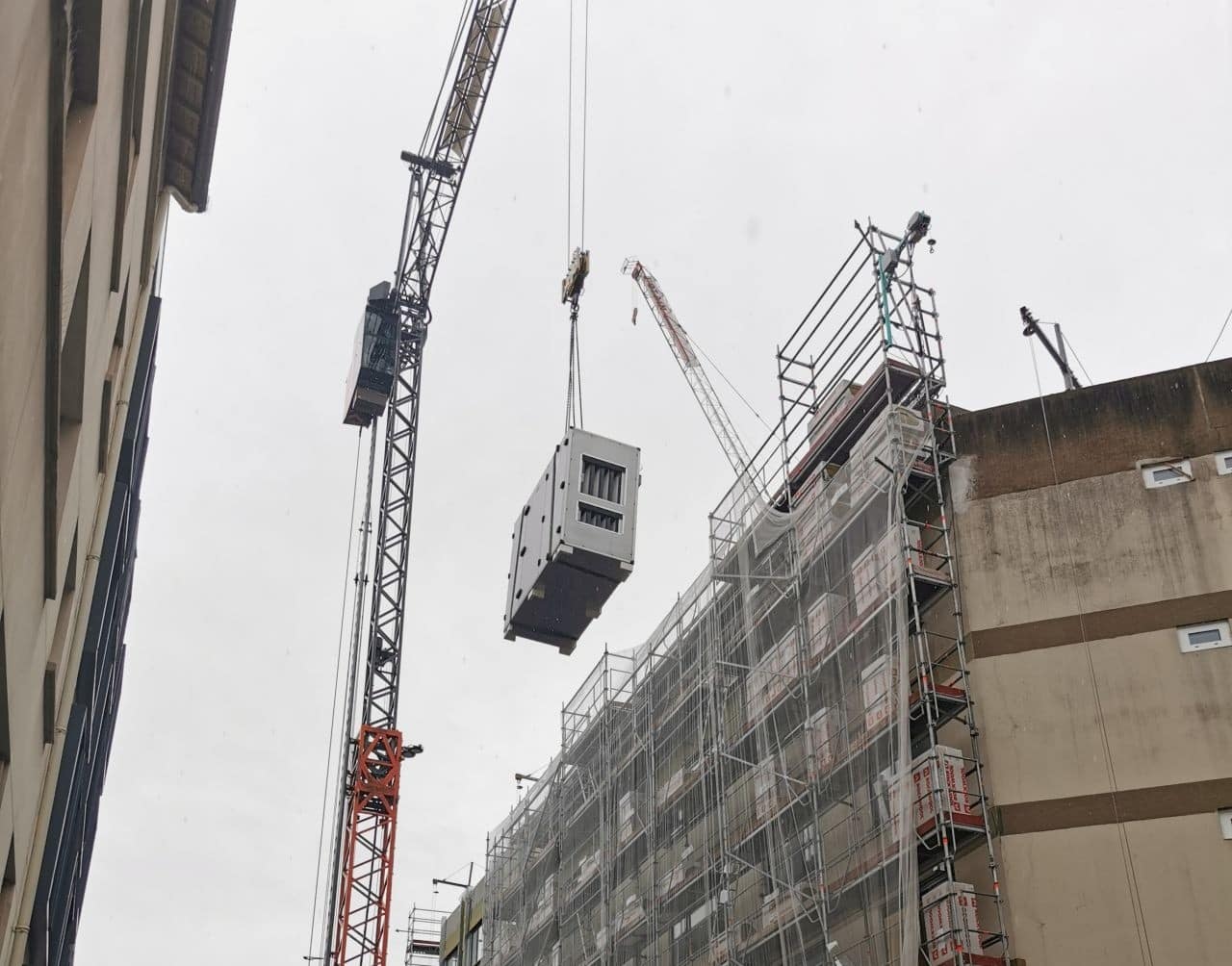
While this standard was initially intended to regulate air treatment in the healthcare sector, it is nonetheless a genuine driver of innovation in the world of air-handling technology. As a manufacturer, the requirements and criteria of NF S 90-351 have enabled us to imagine and design new products that are even more efficient. The modularity and design of our equipment are integrated into a comprehensive, highly demanding approach.
This approach contributes to controlling the risk of airborne contamination and thereby helps to secure the environment for patients and healthcare professionals.
A French standard versus international standards
NF S 90-351 forms part of a broader set of standards dedicated to contamination control. It is based in particular on the NF EN ISO 14644 series relating to cleanrooms and associated controlled environments. Its distinctive feature lies in its application to healthcare establishments and an approach incorporating risk analysis, aeraulic performance, facility design, utilisation, qualification and maintenance.
Compliance can represent a significant investment for hospitals. It is also worth noting the evolving nature of this type of standard in the face of technological innovations and public health phenomena.
In conclusion, it can be said that the NFS 90-351 standard should not be viewed as a mere technical constraint. Its purpose is to transform air control for greater safety and it constitutes an undeniable driver of innovation.